

Evelyn DuBose Bozeman Remembers, Part II: A Life in Sports
Last month we featured Evelyn’s memories of a joyous childhood on a family farm on Dogwood Road. Part II gives us a different side of Evelyn—a recollection of a life in sports in segregated Montevallo during the 1940s and 1950s. Her story pays tribute to the inventiveness of Montevallo’s Black community. Even during the Jim Crow era, families created athletic experiences for their children. This story preserves a strand of the town’s history that might otherwise be forgotten.
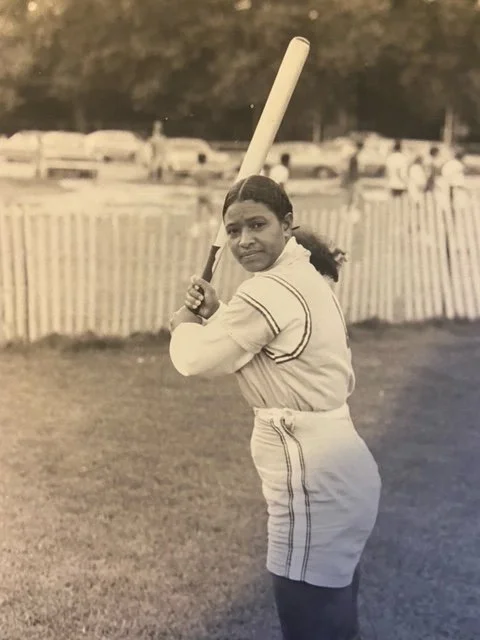
Evelyn taking practice swings before a game in Huntington, New York.
Softball MVP, physical education teacher, lifelong tennis player--Evelyn DuBose Bozeman is passionate about the joys of physical activity. “I loved running, jumping, and climbing trees,” she recalls. “I tried to do everything my three older brothers would so. Sometimes I would climb too high, and one of my brothers would have to rescue crying Evelyn, who could not find her way down.”
“But I wanted everyone to love running and jumping too. Is it any wonder that I chose to become a movement education specialist?”
Her first basketball coach was Miss Junie Mae Williams, “a great teacher and coach,” who introduced her to the game as an eighth grader at Almont Elementary.
From 1950 to 1954, she continued to play basketball at Montevallo Negro High School (soon to be renamed Prentice High School). “We were so happy that we had our own high school.” (Until 1950, Black kids seeking secondary education had to be bused a great distance to the Shelby County Training School in Columbiana, AL, a Rosenwald school.) She was coached all four years by Mr. Samuel Maul, grateful to be spared that long ride to Columbiana.
The bus ride took Evelyn past the white girls from the college—Alabama College, today the University of Montevallo—playing sports she longed to play, such as softball, field hockey, and lacrosse. “But my high school was small and only had one sport team, basketball.”
She enjoyed “four wonderful years” in the high school program. But there was a hitch. The school lacked a gymnasium. They had to practice outside. “It was pretty rough on cold windy days—but that was how it was. A gymnasium was built the year after I graduated.”
She went on to play basketball at Tuskegee. It was the only team sport available for women. “I was not good enough or tall enough for college basketball. I was a good practice player, but on the bench for most games. Those years were lost for me.”
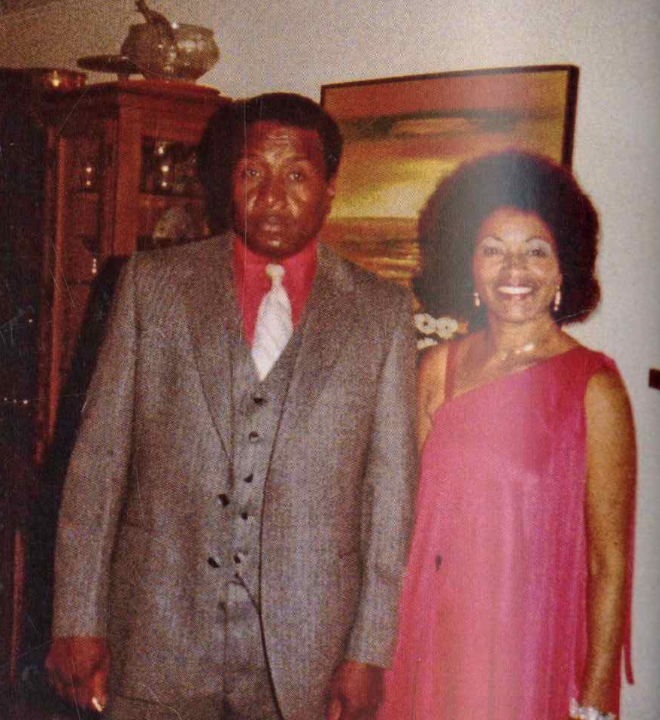
Amos and Evelyn. “We loved sports. It wasn’t long before we loved each other.”
Lost, but not entirely. At Tuskegee she learned to play tennis. Today, age eighty-eight, retired in Palm Coast, Florida, she continues to play. She was taught tennis by the man who became her husband of sixty years, Amos Bozeman. Their life together began in sports: “We loved sports. It wasn’t long before we loved each other.”
“I was so happy,” she recalls, “to see those beautiful courts at Tuskegee.” Montevallo’s two public tennis courts had been off limits for Blacks. Like most kids those days, she learned to swim in the local creek.
Evelyn does not dwell on the slights or unfairness of segregation. She prefers to honor the people who opened up possibilities for Black children.
At the top of the list is her father, Regal D. “Reggie” DuBose. From around 1950, when she was twelve, he ran the city’s summer recreation program. He was assisted by Mrs. Susie Willis, a local Shelby County school teacher, who worked mostly with the younger kids.
Reggie DuBose taught Evelyn basic skills in the sport she loved above all others: softball. She excelled as a hitter from the start.
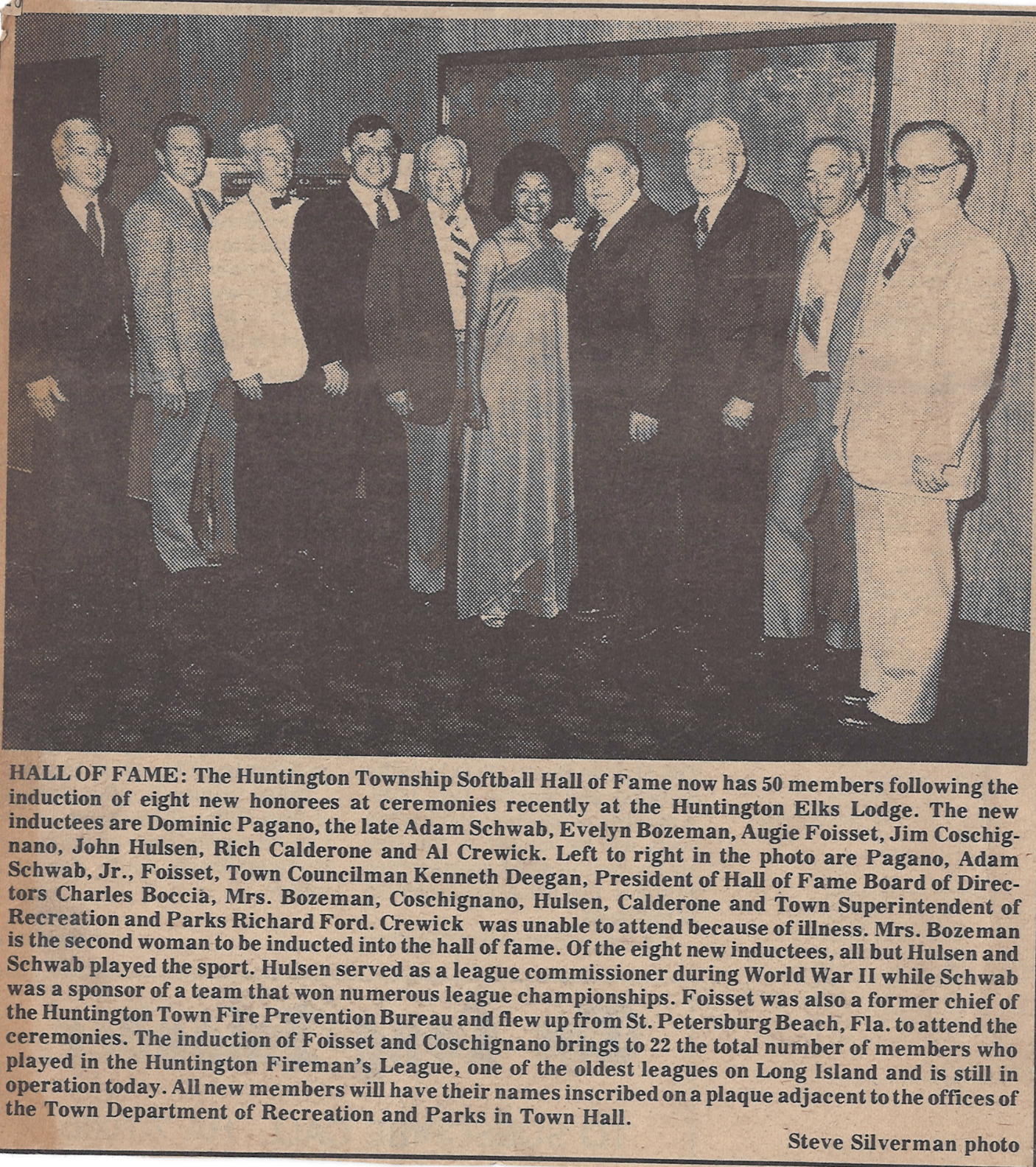
Her coach-father could not have known that decades later his talented daughter would appear in Long Island Softball News on its Legends of Softball page. That she would be named MVP in her first tournament with New York’s Huntington Mice. That in 1995 she would be inducted into the Huntington Township Hall of Fame.
Not one to brag, Evelyn says simply, “I always found hitting easy.”
In a recent interview, she shared memories of women’s softball in Montevallo, including some of the great players from those days: Marva DuBose, Lorraine Seay, Louvenia Brown and pitcher Mattie Mae Sullivan. The Aldrich girl’s team was led by long-ball hitter Georgiana Williams and Dorothy Fields.
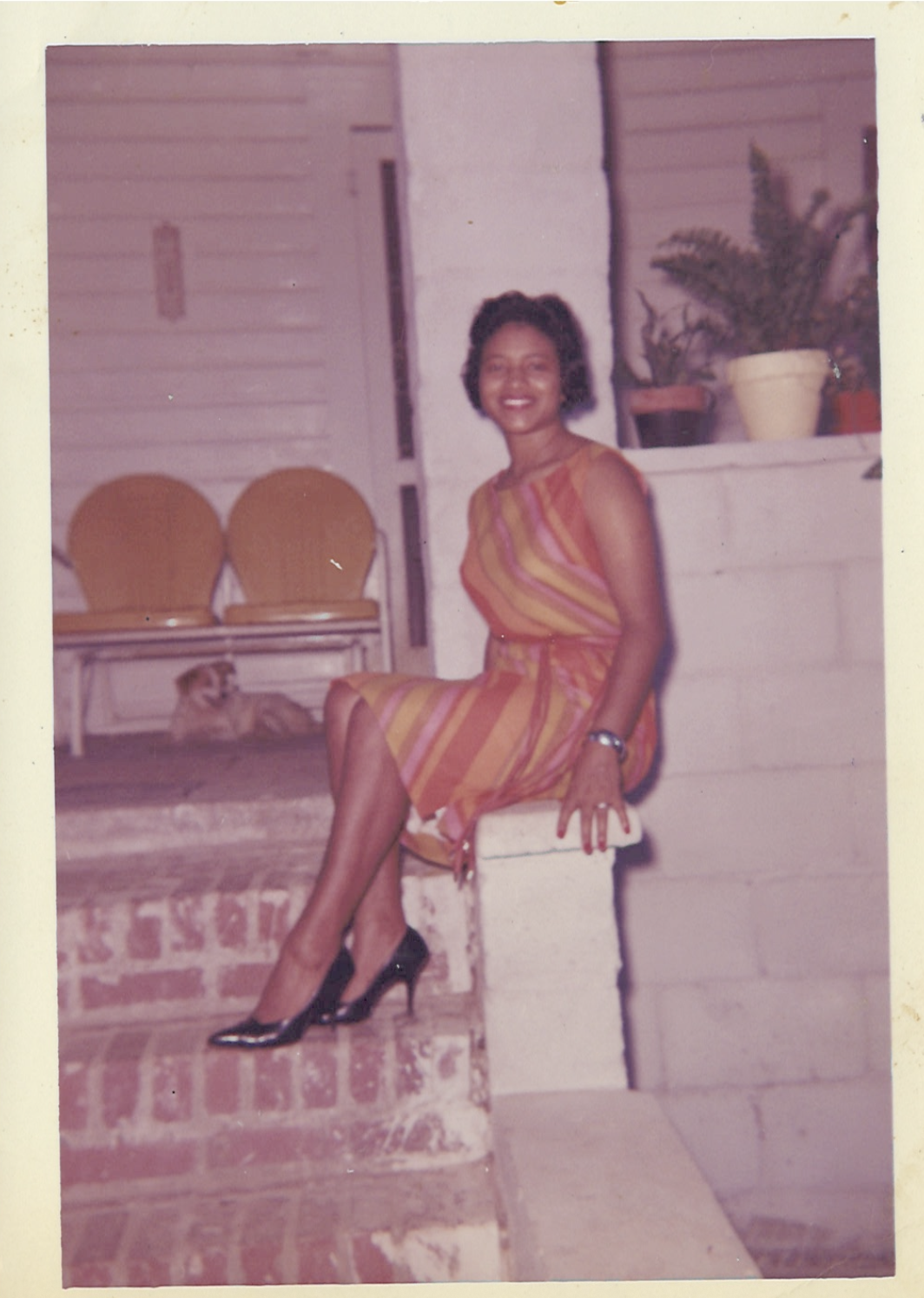
Evelyn on her Dogwood porch. She had a life outside of sports.
Aldrich was then a mining town. Astonishingly, their ball field was on a coal dump plateau. “That’s the way it was for those girls,” Evelyn recalls. “It was literally a black ball diamond made of coal dust. I made sure I did not have to slide when we played on that coal dump.”
The summer softball schedule “was great for all the girls who wanted to play. I eagerly looked forward to the summer months filled with softball practice and travel to games in other small towns.”
She remembers the difficulties Black athletes faced during this era. Exclusion from public recreational spaces. Inadequate facilities—the windy outdoor basketball court, the coal dump playing field in Aldrich.
But she reminds us of something more powerful: the Black community’s support for girls who competed for the sheer joy of it. “No records were kept, no award ceremonies were arranged, the townspeople just flocked over to the field to see our games and cheer us on.”
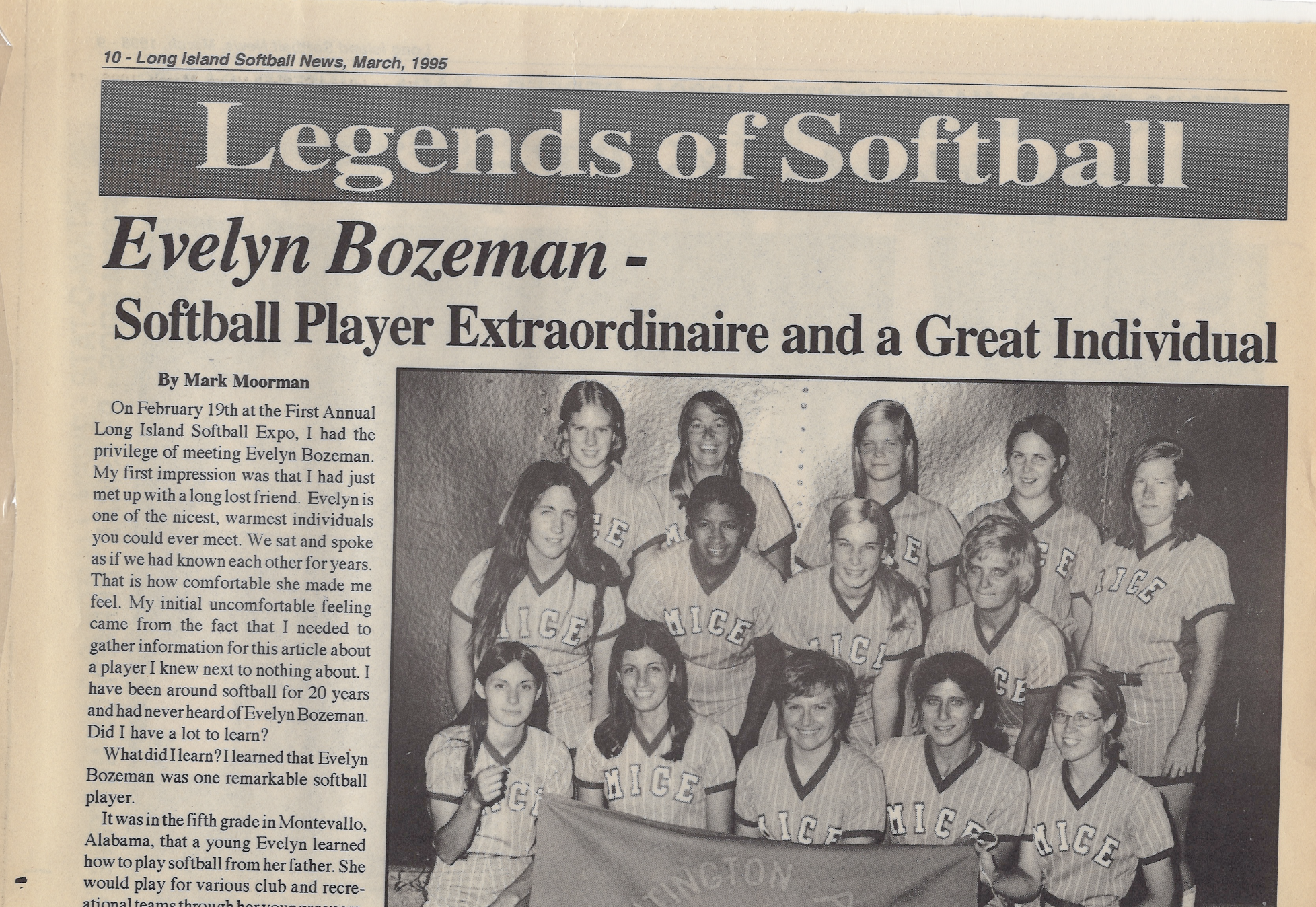
We thank Evelyn for sharing her unpublished writings: “Amos & Evelyn through the Years: The History of Us,” “DuBose Family Reunion 2017,” “My Return to Montevallo,” and “Prologue.” We drew from a telephone interview, 7 April 2026, 2026 and an article by Mark Moorman, “Evelyn Bozeman—Softball Player Extraordinaire,” in Long Island Softball News, March 1995, p. 10. For more photos, go to the Untold Stories section of themontevallolegacyproject.com. If you or someone in your family has memories to share, contact us at Montevallolegacy@gmail.com. Submitted by Kathy King and James Salter.