

How Black Neighborhoods Disappear: Part I. Jacksonville and the First Displacement
“A Resolution to Vacate a Portion of a Street for the Housing Authority of the Town of Montevallo” was approved. ”
Part I. Jacksonville and the First Displacement
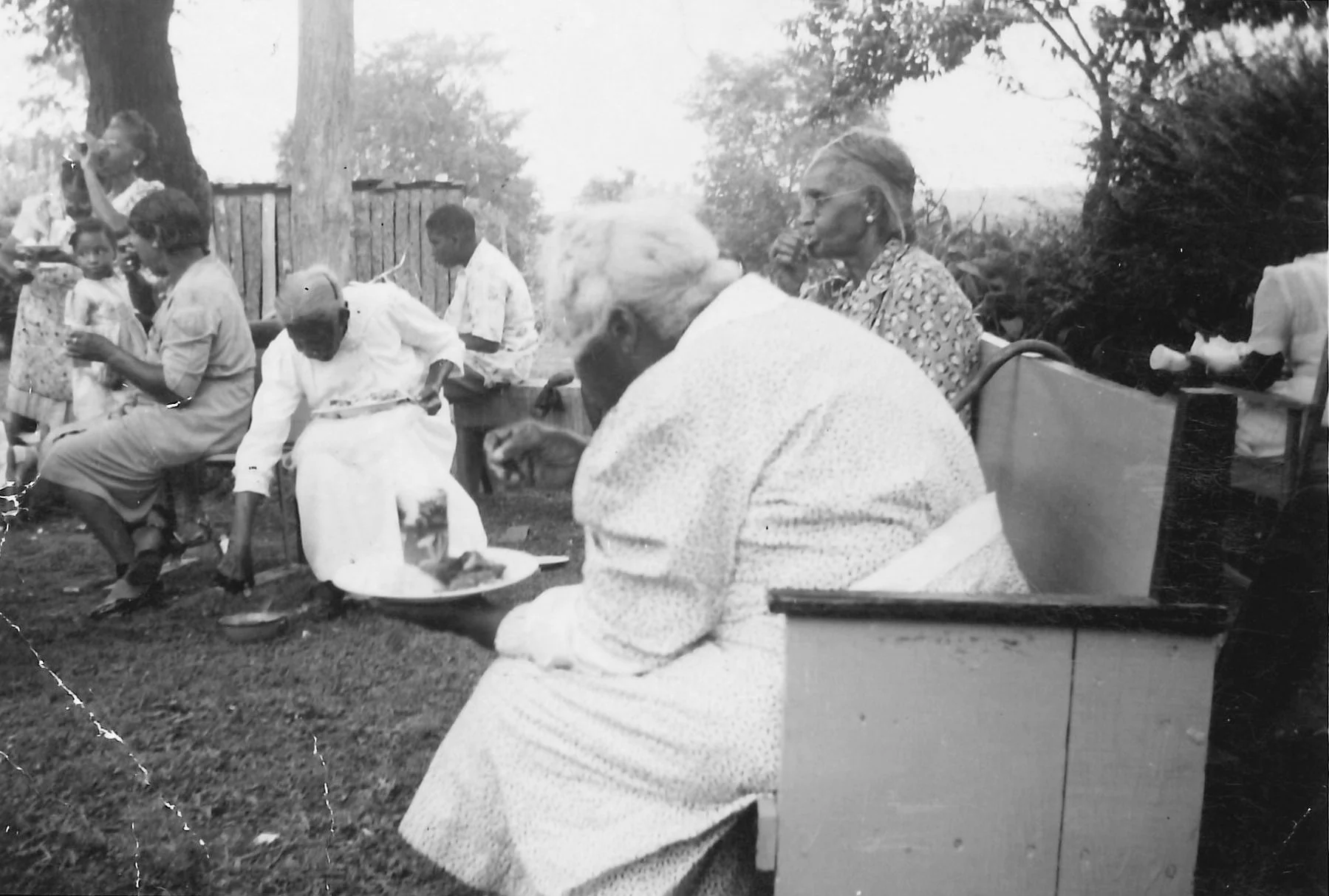
Jacksonville was never just a cluster of houses.
When we hear about neighborhoods destroyed by urban renewal, we often think of big cities like Birmingham, Atlanta, or Detroit. Few would expect such a story in Montevallo.
Yet in the 1950s and 1960s, families in a close-knit Black neighborhood known as Jacksonville—an area that included northern extensions of Main and Island Streets—were forced to vacate their homes. The government has the power to condemn properties for public use so long as the property owner is given “just compensation.” It is called eminent domain.
The Federal Housing Act of 1949 was in force until 1973. Under that act, cities were authorized to use the power of eminent domain to clear ‘blighted neighborhoods” for “higher uses.” In 24 years, 2,532 projects were carried out in 992 cities that displaced one million people, two-thirds of them African American.
-- Mindy Fullilove, MD, Eminent Domain & African Americans: What is the Price of the Commons?
The story is little known today. Descendants of Jacksonville families have not forgotten it.
This Untold Story, and the next, look at a piece of Montevallo’s past shaped by the Federal Housing Act of 1949. The law encouraged cities to use eminent domain to clear areas deemed “blighted or deteriorated” in the name of progress.
However well-intentioned, these programs often devastated Black communities. Here in Montevallo they brought disruption, loss, anger, and lingering pain.
We begin this two-part Untold Story with the city’s condemnations of Jacksonville properties, most of them Black-owned or rented. Next month we will look at the beginnings of the Arden subdivision, just north of the fire station on Ashville Road, just as historic Jacksonville faced a second wave of condemnations.
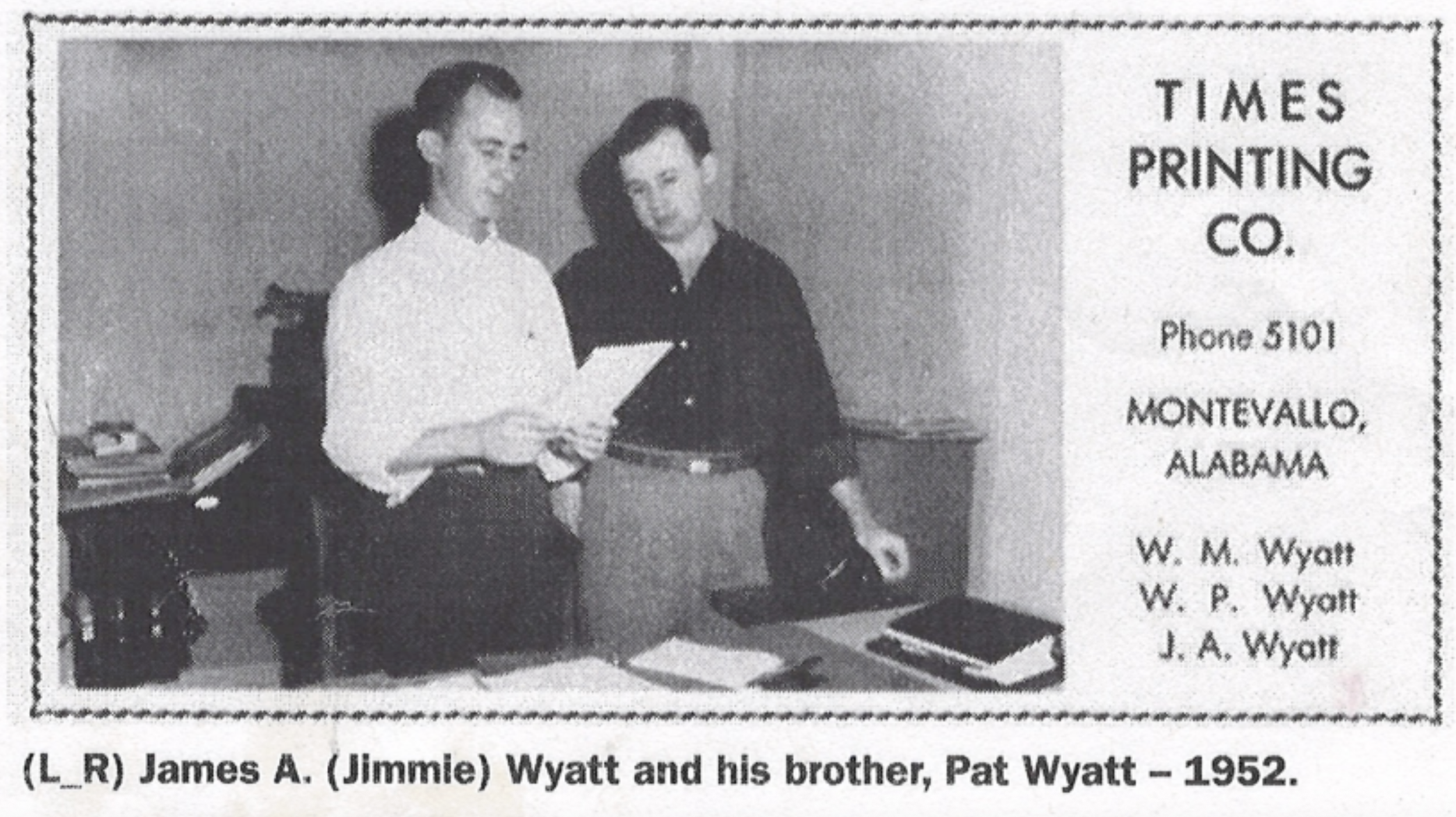
Mr James A. Wyatt was Executive Director of the Housing Authority of the Town of Montevallo.
In the early 1950s the Montevallo Housing Authority was led by James A. Wyatt. In January 1951 he appeared before city council seeking approval for a low-cost housing project on the north side of town.
But people were already living there. To build the project, the houses of mostly Black people were to be “vacated”—emptied by the power of eminent domain.
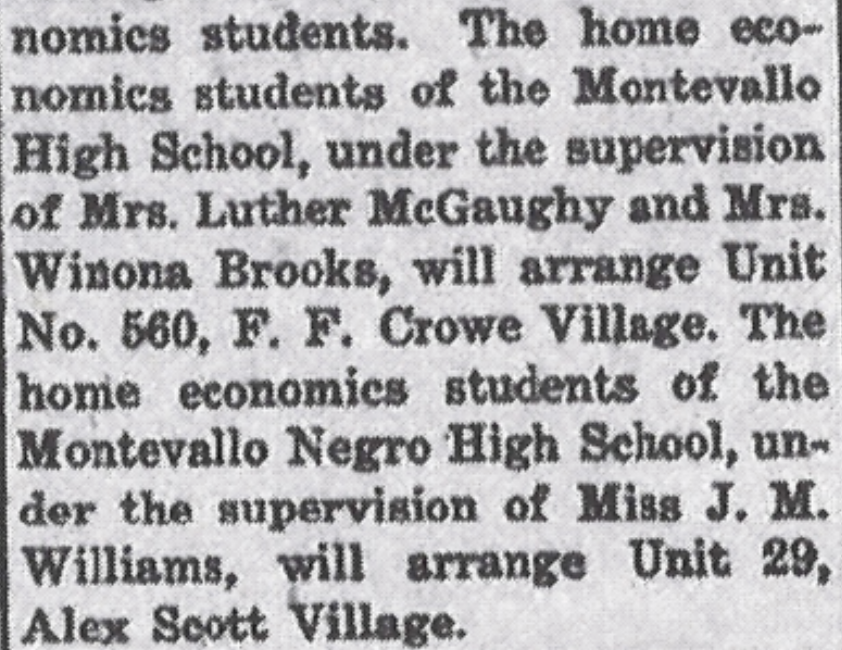
“Open House at Housing Projects Saturday and Sunday”
The Montevallo Times, April 2nd, 1953
Students at the Montevallo Negro High School, soon to be renamed Prentice High School, were involved in decorating the all-Black housing project at the same time as white students of Montevallo High School decorated the all-white housing project.
Despite resistance from Jacksonville resident Electra Thrift, backed by two white women who opposed the forced removals, the project moved forward. By 1953 the Housing Authority was interviewing tenants for the all-white Crowe Village housing project, as it is still known.
Jacksonville was never just a cluster of houses. It was a neighborhood, a community, a network of connections and attachments extending back several generations. Black families had lived, loved, raised children, and worked there since at least the 1880s. Around 1924, the community built the The "Little School" on Island Street to provide the first public education to Black children of Montevallo.
Jack Shortridge, a carpenter and founder of Jacksonville, built a house for himself and his wife, Narcissus, on an acre of land along the very stretch of Main Street that would later be “vacated.” From at least 1879 the house stood on the hill where Xcaret now sits, formerly the site of Eclipse Coffee and Books. Jack and Narcissus are the grandparents of Birmingham civil rights leader William E. Shortridge.
For $50 Jack purchased the land from Frank King: “One acre of land fronting on main street in the town of Montevallo to be taken out of the corner of the field near the blacksmith shop of Edward Vest . . . being the same lot on which said Jack Shortridge now resides.”
Shelby County Deed Book 6, pages 427-8, Shelby County Courthouse, Columbiana, Alabama.
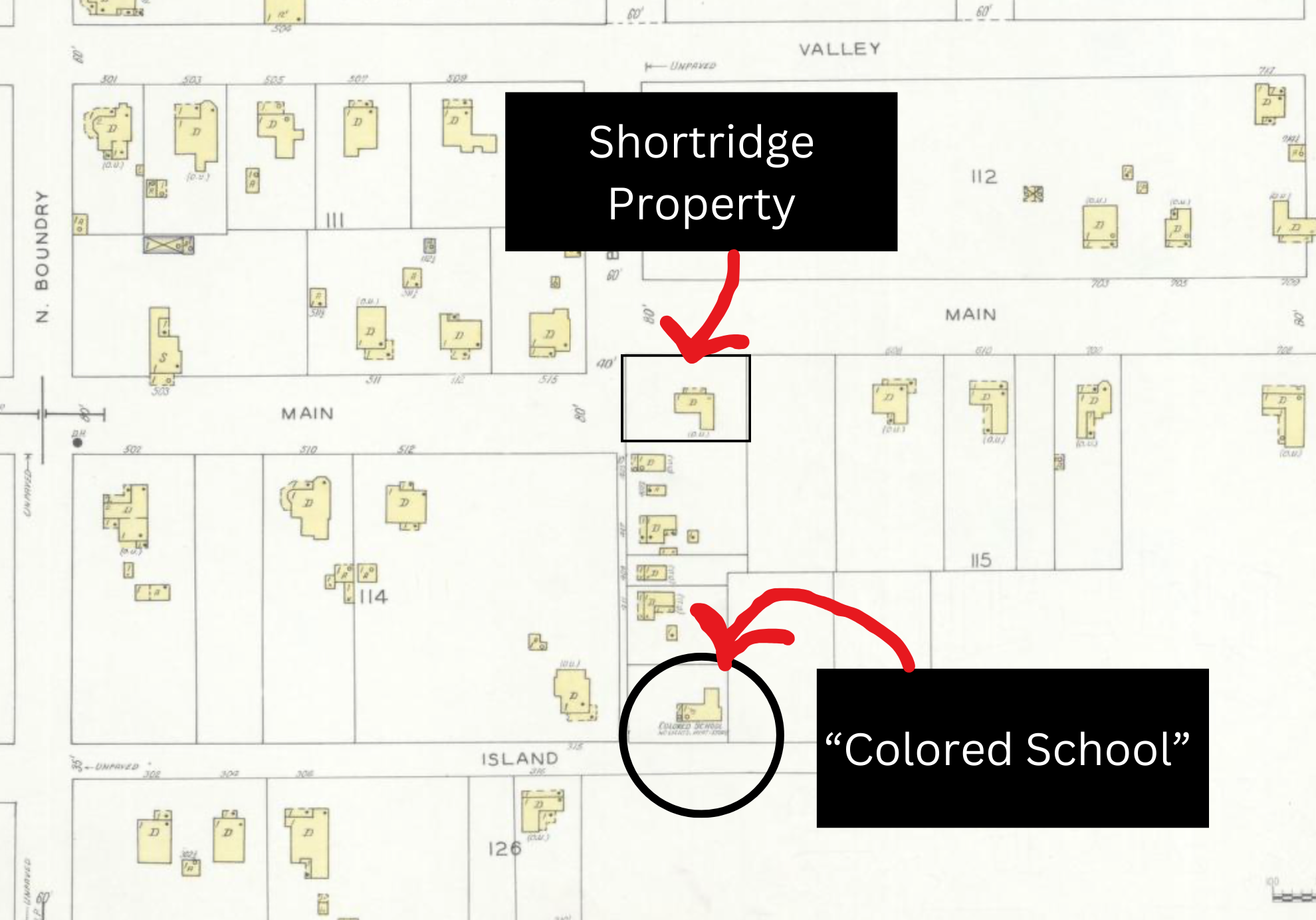
Source: The 1933 Sanborn Fire Insurance Co. Maps Collection from Library of Congress.
Their granddaughter, born in Montevallo in 1897, had vivid memories of Jacksonville. “My grandparents had the most beautiful house on the block,” recalls Lillian Shortridge Jones. It had a parlor, a cistern on the covered back porch, and a swing on the long front porch. The yard featured a sunken green house where her grandmother, Narcissus, grew rare plants.
Narcissus attended Ward Chapel AME Church every Sunday. Jack preferred to spend Sunday mornings on the porch swing sipping corn liquor. (“The Family History of Lillian Shortridge Jones.)
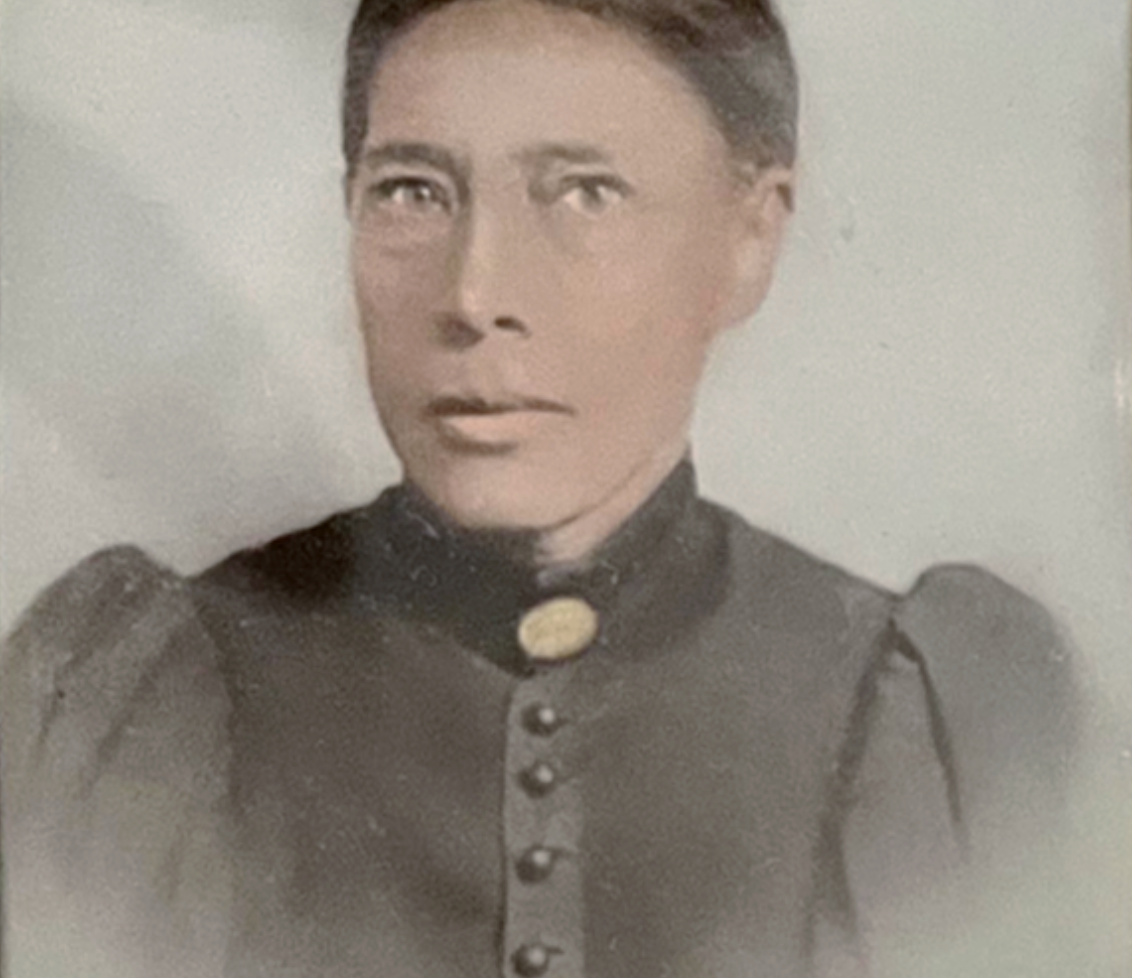
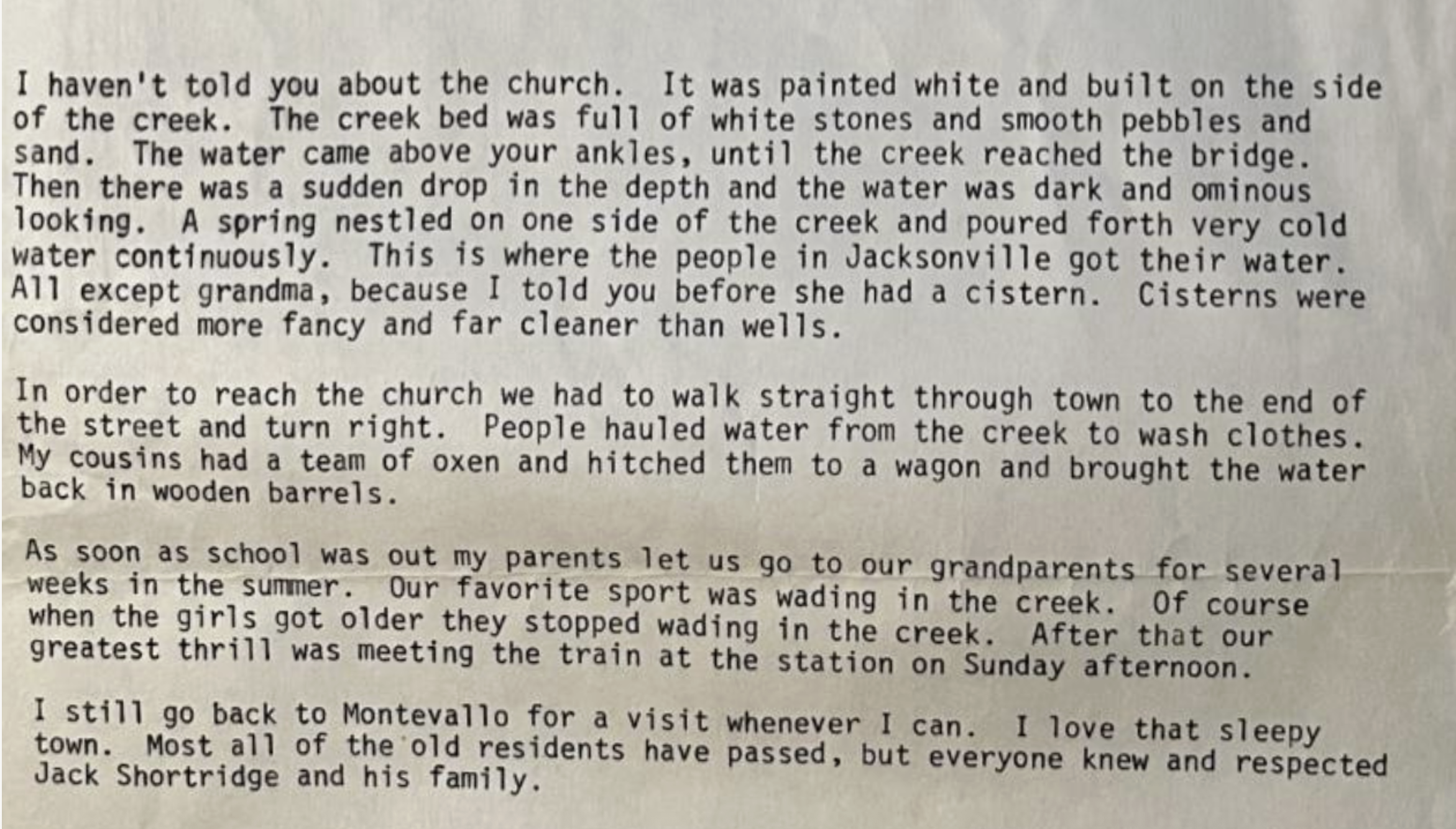
Photo of Narcissus Shortridge and information from “The Family History of Lillian Shortridge Jones” by kind permission of Shortridge descendant Dr. Linda Thompson.
Another prominent local family soon settled nearby. Jesse Brazier, an AME circuit preacher and founder of Ward Chapel Church (1872), purchased land on Main Street in 1885.
In an affidavit dated January 24, 1952, James A. Wyatt states that Jesse Brazier purchased this property from Electa Storrs and Lizzie Troy in 1885 citing as his authority records on file in the Probate Office of Shelby County. For the affidavit, see Probate Records, No 11, Box 104, in Columbiana, AL.
Over time, Jacksonville developed into a small world of working people. Men worked in the mines in nearby Aldrich. By 1930 at least four miners owned their own homes. (One was Thomas Thrift, Electra’s husband.) Others worked as cooks, janitors, laborers at the brick plant. By 1940, Alabama College (now the University of Montevallo) had emerged as the major employer, providing jobs cleaning, cooking, laundering, and janitorial work.
The close-knit life of the neighborhood is recalled by one of Jesse Brazier’s grandchildren: “All of Grandpa Jesse’s children grew up in Jacksonville. Their children married and built their homes and reared their children there. You don’t know the fun and joy of growing up with all your cousins, with your aunts having a hand in loving you and punishing you too. Aunt Mary sitting on her back porch seeing everything we kids did and reporting to our mothers if we did wrong. We had birthday parties with lemonade and ginger snaps. The children would always be in our yard.”(An unnamed descendant for the Brazier Family Reunion, 1980. Used by kind permission of James Salter)
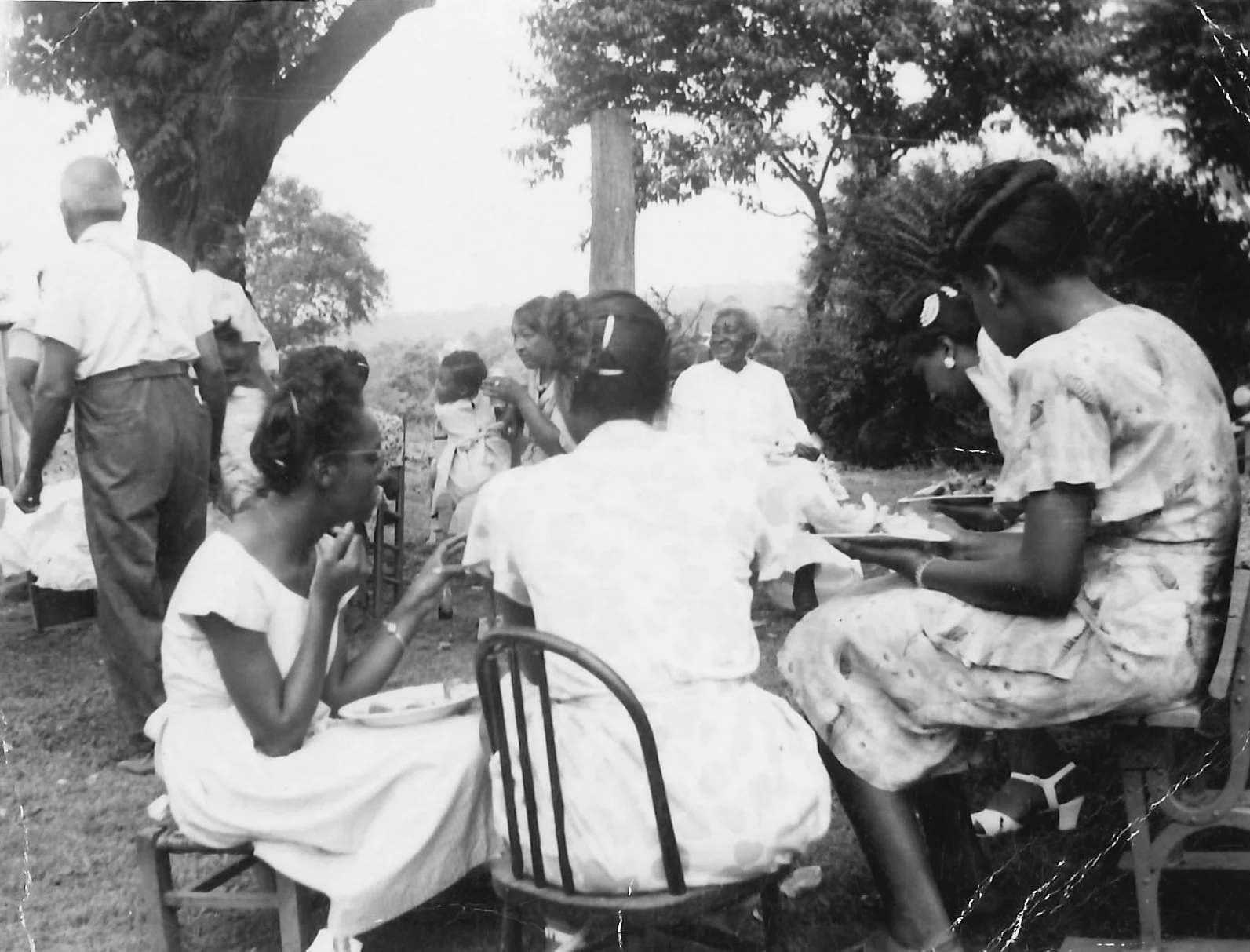
This is the human reality concealed by that cold word: vacate.
Ed. note: The story continues next month along with the closely connected story of the creation of Arden subdivision. As Black families were displaced from Jacksonville, a neighborhood just to the north was being built with covenants that barred people of color. Send comments, questions, or additional information to montevallolegacy@gmail.com. We would love to hear from you! Submitted by Kathy King and James Salter.