

How Black Neighborhoods Disappear: Part II. Arden Subdivision and a Second Removal
Ed. note: This issue continues the story of the displacement of Black families from Jacksonville, a once close-knit community that, starting in the 1950s, was absorbed into several public properties—Parnell Library, Montevallo Elementary School, and the Crowe Village housing project on upper Main and Island streets. The forced removal of people of color coincided with the development just north of Jacksonville of a residential space exclusively for whites. It is still called Arden Subdivision.
Part II. Arden Subdivision and a Second Removal
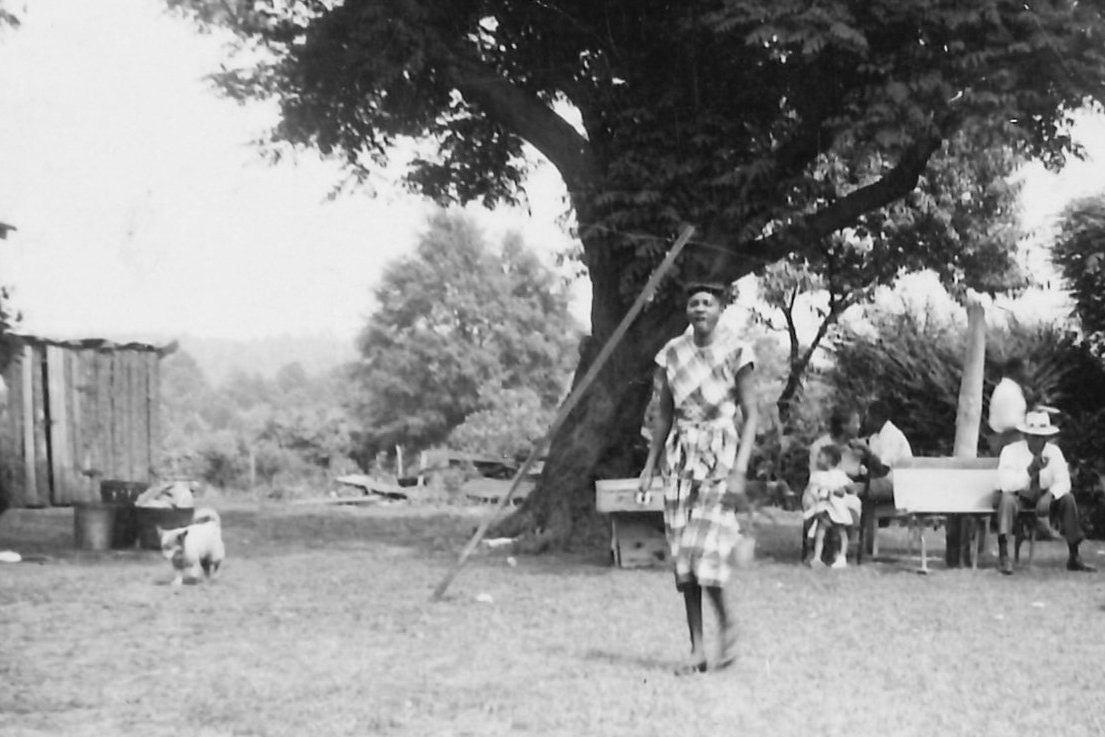
Jacksonville stood at the edge of town. Photo courtesy of James Salter.
As Black residents were being “vacated” from Jacksonville, a community with historical roots, city leaders were creating an all-white residential enclave just north of the torn-away Jacksonville neighborhood.
The President of the Montevallo Development Co was local businessman R. E. Whaley, who also developed the Whaley Shopping Center on the block where Main and Middle Streets intersect.
Arden Subdivision was the brainchild of the Montevallo Development Company, incorporated in 1947. Arden was to be an up-to-date suburb governed by signed agreements – called covenants – that served to protect property values.
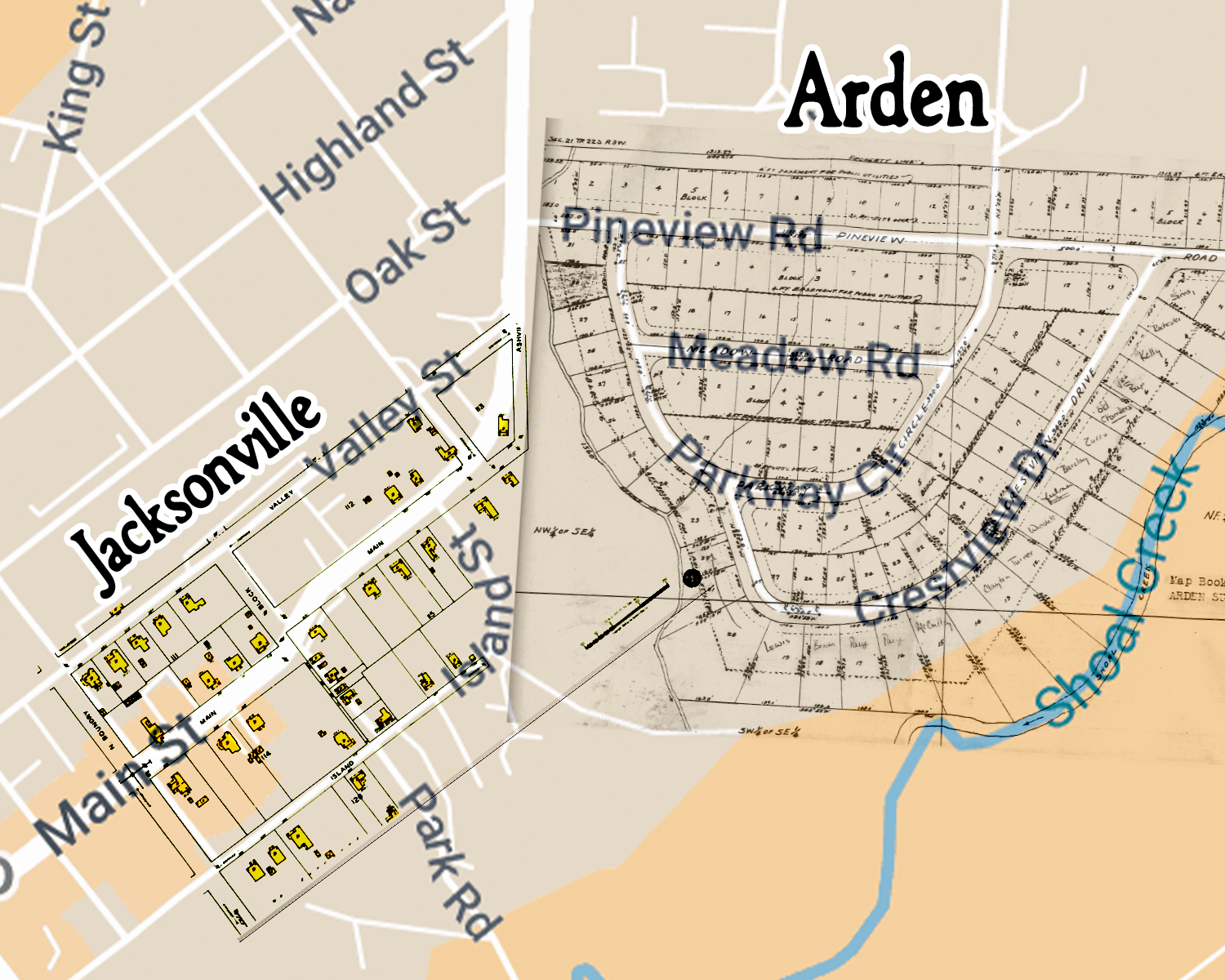
An overlay of the Jacksonville area from the Sanborn Fire Map (1934) and the proposed map of the Arden Subdivision (1949)
Covenants disallowed use of trailers, shacks, or garages as living spaces. They prohibited farm animals. And explicitly excluded persons of color. (“No person of any other race than Caucasian shall use or occupy any building or any part thereof.”)
Covenants of “The Montevallo Development Company”
No. 8. No trailer, basement, tent, shack, garage, barn, or other building erected in said Arden’s Subdivision shall, at any time, be used as a residence temporarily of permanently.
No. 10. No person of any other race than Caucasian shall use or occupy any building or any part thereof or any lot, except that this covenant shall not prevent occupancy by domestic servants or a different race domiciled with the owners or tenants of said premises.
No. 12. No farm animals shall be kept or maintained on any residential building lot.
Filed in Shelby County Probate Court, Oct. 6, 1949, recorded in D. Book 139, p. 269, Shelby County Recording Dept., Columbiana, AL
Formalizing of segregation comes as no surprise in the waning days of Jim Crow. What may still give pause is the exception: “domestic servants” of color were allowed to reside in Arden—so long as they were “domiciled” with their white employers. A reminder of how housing policy served to protect white privilege.
With the city’s support Arden thrived. The Montevallo Times, June 4, 1953, reported that the council had approved $50,000 for paving as part of a “program of public improvements, much of it in Arden.” Nine houses had been completed. The development company would go forward with an “extensive construction program” once paving was finished.
Meanwhile, back in Jacksonville. . .
In early 1960 what remained of the historic neighborhood faced a new round of removals. This time eminent domain enabled the Shelby County Board of Education to take land for an all-white elementary school.
Montevallo Elementary School opened in 1964. Today it serves children of all backgrounds. Much of the land surrounding it once belonged to Black homeowners.
One homeowner was Henry Thrift, son of Electra and Thomas Thrift. We met the Thrifts last month when they resisted the condemnation of their house on Main Street.
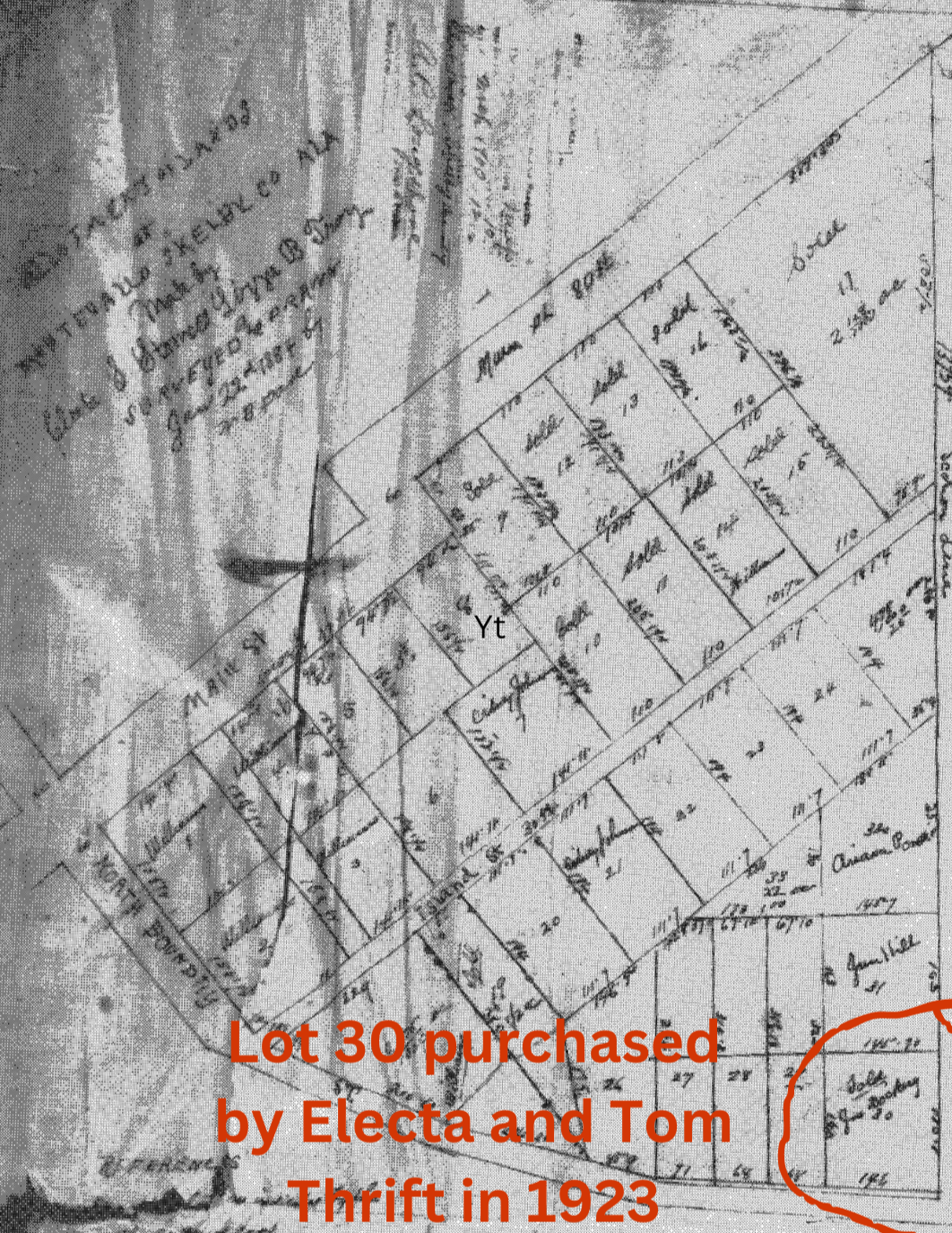
Map of the Storrs and Troy Addition to the town of Montevallo, surveyed and drawn 1884 (Map Book 3, Shelby County Recording Dept., Columbiana, AL.) Electa and Tom Thrift purchased the Lot 30 for $125 from Emmet Shaw July 2, 1923. The Thrift family continued to live in their house on Main Street house until the 1951 condemnations.
Something of the injustice of this second wave of removals can be felt through the memories of Henry Thrift’s daughter Patricia Thrift Barnes Walker.
Patricia was born in 1944 and raised in a comfortable home near Shoal Creek, between what are now Montevallo Elementary School and Orr Park. When the notice of condemnation arrived, she was a teenager who enjoyed a room of her own and, a rarity in those days, indoor plumbing – including a bathtub!
Condemnation baffled her. The house had just been remodeled, with new floors. “It was gorgeous. It was one of the most beautiful houses down there.” The family had to move across town to a much smaller house that previously her father had rented out.
Thinking back on the upheavals her family had lived through, Patricia muses: “It’s just been a mixed up world for us.”
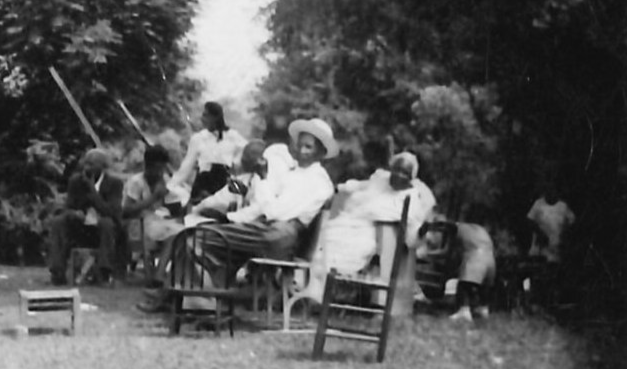
Not much remains today of the neighborhood where the Shortridges, Braziers, Thrifts, and other families once lived richly connected lives. The Jacksonville story reminds us that local landscapes carry layers of history not always visible.
They remind us that injustice can be invisible as well.
The uprooted families of Jacksonville lost more than houses. They lost Home in the fullest sense of the word: an assured sense of their “place in the world, a community, neighbors and services, a social and cultural milieu, a commons that sustains a group,” as Mindy Thompson Fullilove writes.
The history of that loss is part of Montevallo’s story.
Ed note: Our thanks to Patricia Walker whom we interviewed twice for this piece (July 17, 2022 and Feb. 26, 2026). The Fullilove quote is found online in “What is the Price of the Commons?” in Perspectives on Eminent Domain Abuse vol. 1: Eminent Domain & African Americans. For an enhanced version of the Jacksonville story, see the Untold Stories section of themontevallolegacyproject.com. Send comments, questions, or additional information to montevallolegacy@gmail.com. Submitted by Kathy King and James Salter.